How to Start a Home Apothecary: A Beginner's Guide
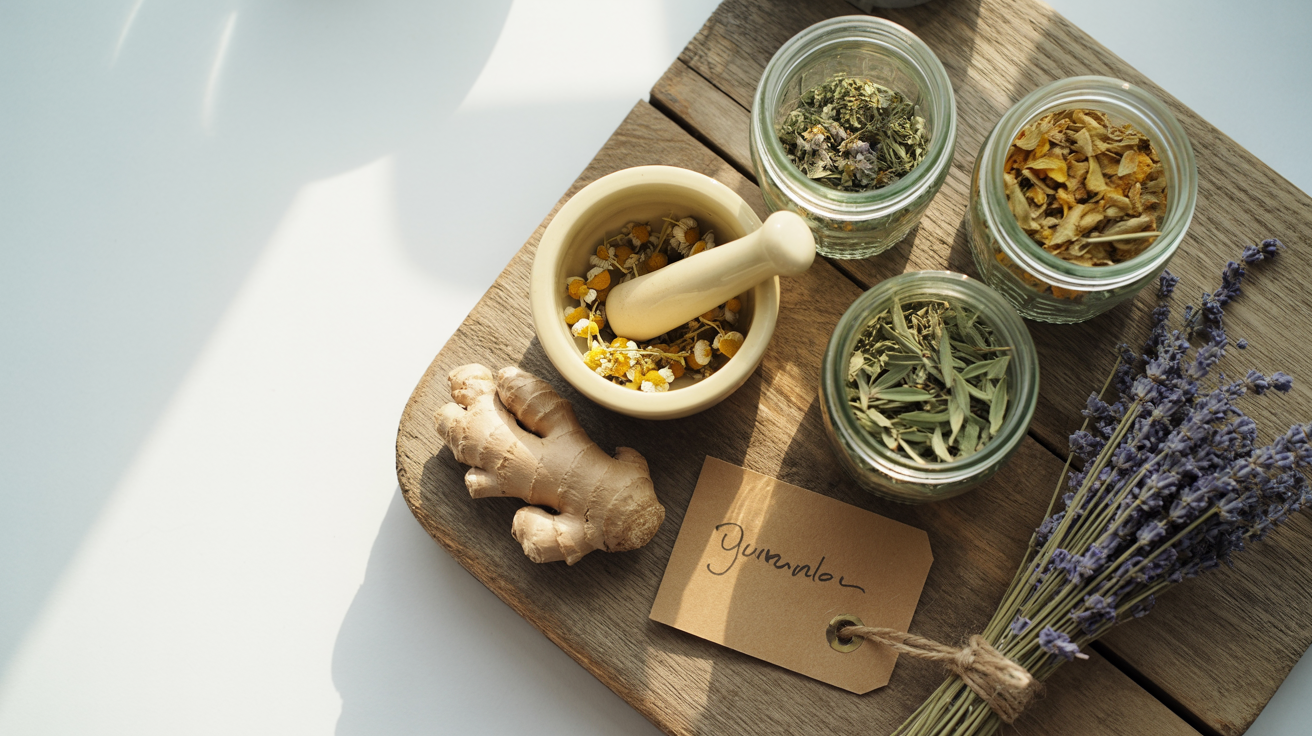
You don't need a wall of amber bottles and a degree in botany to start working with herbs. You need five plants, a few tools, and the willingness to begin.
The idea of a "home apothecary" can feel intimidating — something for herbalists with decades of experience, or for people who forage their own elderberries and own a copper still. But the reality is much simpler. A home apothecary is just a small, intentional collection of herbs and preparations you keep on hand for everyday needs: a tea for sleep, a tincture for digestion, a salve for dry skin, an infusion for when a cold is coming on.
Women have kept these kinds of collections for thousands of years. What's changed isn't the practice — it's that we've been taught to forget it.
What a home apothecary actually is
A home apothecary isn't a pharmacy and it isn't a replacement for medical care. It's a set of tools that sit between "do nothing" and "go to the doctor." It's the chamomile tea you reach for when your mind won't settle at night. The ginger preparation you make when nausea hits. The lavender salve you apply to a tension headache instead of immediately reaching for a pill.
The key word is intentional. This isn't about hoarding dried herbs in mason jars for aesthetic purposes. It's about knowing what you have, why you have it, and how to use it safely. A good home apothecary is small, well-understood, and actually used.
Most of the herbs you need are available at any health food store, online herb supplier, or even your local grocery store. You don't need to grow or forage anything — though if that interests you, it's a natural next step later.
The five herbs to start with
If you're building from scratch, these five cover the most common everyday needs. They're well-researched, widely available, gentle, and hard to get wrong.
Chamomile (Matricaria chamomilla). The most versatile beginner herb. Calming for the nervous system, soothing for digestion, and gentle enough for most people. Use it as a tea before bed, or as a cool compress for irritated skin. It's the herb I recommend first to anyone who asks "where do I start?"
Ginger (Zingiber officinale). Your digestive anchor. Fresh ginger root makes an effective tea for nausea, bloating, and sluggish digestion. It's also warming — useful in cold seasons or when you feel the first signs of a chill. Keep fresh root in the fridge and dried powder in the cupboard.
Peppermint (Mentha piperita). A digestive and respiratory staple. Peppermint tea relieves bloating, gas, and tension headaches. The menthol opens airways when you're congested. One caution: it can worsen acid reflux in some people — if that's you, skip this one and lean on ginger instead.
Lavender (Lavandula angustifolia). Calming for the nervous system, helpful for sleep, and effective topically for minor burns, insect bites, and tension. Keep dried lavender for teas and sachets, and a small bottle of lavender essential oil for topical use (always diluted in a carrier oil, never neat on skin).
Elderberry (Sambucus nigra). Your immune support herb. Elderberry syrup is one of the most well-supported herbal preparations for reducing the duration and severity of colds and flu. You can buy pre-made syrup or make your own from dried berries. One important note: always use cooked elderberries — raw berries and leaves contain compounds that can cause nausea.
The tools you need (and the ones you don't)
Starting simple keeps you from getting overwhelmed and abandoning the project before it begins. Here's what you actually need:
A small saucepan or pot. For making decoctions (simmering harder plant materials like ginger root or dried berries). You already have this.
A tea strainer or French press. For infusions (steeping lighter plant materials like chamomile flowers or peppermint leaves). A French press works beautifully for herbal tea and you probably already own one.
A few glass jars with lids. For storing dried herbs. Mason jars are perfect. Keep them in a dark cupboard, not on a sunny shelf — light degrades potency.
Labels and a marker. Label every jar with the herb name and the date you bought or dried it. Dried herbs are best used within a year. Unlabeled jars become mystery jars, and mystery jars don't get used.
A simple notebook. Write down what you make, what you use it for, and what you notice. This is how you build real knowledge — not from memorizing a textbook, but from your own observations over time.
What you don't need: a dehydrator, a tincture press, specialty glassware, or a dedicated apothecary room. Those are for later, if you want them. Start with a shelf in your kitchen cupboard.
Your first three preparations
Once you have your herbs and tools, make these three things. They'll take less than an hour total and give you something genuinely useful.
A sleep tea blend. Mix equal parts dried chamomile flowers and dried lavender buds. Store in a jar. When you want it, steep 1 tablespoon in hot water for 5-7 minutes, strain, drink 30 minutes before bed. Simple, effective, and something you'll reach for often.
A ginger decoction for digestion. Slice a thumb-sized piece of fresh ginger into thin coins. Simmer in 2 cups of water for 10-15 minutes. Strain and sip after meals, or whenever your digestion feels sluggish. Add honey if you like. Keeps in the fridge for 2-3 days.
A peppermint headache compress. Brew a strong peppermint tea (2 tablespoons dried herb, steeped 10 minutes). Let it cool to room temperature. Soak a cloth in it, wring it out, and place on your forehead or the back of your neck. The menthol combined with the cool compress works remarkably well for tension headaches.
Safety — the part most guides skip
Working with herbs is generally safe, but "natural" doesn't mean "no precautions needed." A few principles to internalize before you start:
Start with one herb at a time. If you try three new herbs on the same day and have a reaction, you won't know which one caused it. Introduce each herb individually, use it for a few days, and notice how you respond.
Check for interactions. Some herbs interact with medications. Chamomile can increase the effect of blood thinners. St. John's Wort (not on our starter list for this reason) interacts with many medications. If you take any prescription medication, check with your pharmacist before adding herbs — they're often more knowledgeable about herb-drug interactions than doctors.
Pregnancy and nursing change the rules. Many herbs that are safe for the general population are not safe during pregnancy or breastfeeding. If this applies to you, check every herb individually and err on the side of caution.
Respect the dose. More is not better. Herbal preparations have effective dose ranges just like any other remedy. Follow recommended amounts and give the herb time to work before increasing.
Go deeper
If this feels like the right direction for you, we have two ways to keep going.
Free: Our resource library includes the Seasonal Remedy Calendar — a guide to which plants support your body in each season, with kitchen-and-garden practices you can start this week.
→ Get the free guides at holisticwellness.living/resources
The full picture: The Apothecary Collection of Home Remedies — co-written with Emma — is the complete family handbook. 130+ herbal monographs with full-color photos, preparation methods, safety guidelines, and the traditional and modern uses of each herb. It's the reference book you keep in the kitchen and reach for when someone asks "is there something natural I can try for this?"
→ See it on Amazon: The Apothecary Collection of Home Remedies
Start today. One herb, one jar, one cup of tea.
— Amanda